New Doctors in the House
Congratulations to the first batch of PhD graduates from the Teaming Lab: Dr. Pam Qian (now Assistant Professor @ the University of Houston); Dr. Sangwon Seo (now @ Google); and Dr. Liubove Savko (now @ Nvidia).
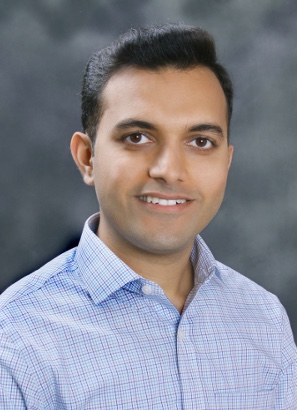
I am an Assistant Professor of Computer Science at Rice University, where I direct the Human-AI Teaming Lab. I am also a member of the Ken Kennedy Institute, the Rice Robotics Initiative, and Rice Digital Health.
Teamwork is central to the human enterprise. Yet, despite impressive advances, today’s AI & robotic systems still cannot team up effectively with people. This gap limits how much these systems can help us, and worse, risks unintended consequences for the very humans they are designed to support. To ensure seamless coordination between humans and machines, my group’s research advances algorithms for understanding human intent and explaining machine behavior.
In collaboration with subject-matter experts, I have applied these algorithms to build AI coordinators to improve teamwork, collaborative robots that work alongside humans, and robotic tutors to support clinical training.
I am also engaged in the broader AI & robotics community, serving on the editorial board of IEEE Robotics and Automation Letters and on program committees for several leading conferences (such as AAAI, ICRA, and AAMAS). I am most proud of my research advisees, several of whom have earned prestigious fellowships and now advance human-AI teaming as independent researchers in academia and industry.
Congratulations to the first batch of PhD graduates from the Teaming Lab: Dr. Pam Qian (now Assistant Professor @ the University of Houston); Dr. Sangwon Seo (now @ Google); and Dr. Liubove Savko (now @ Nvidia).
Robots can now help humans learn physical skills! Read more about the robotic tutor Astrid that helps nurses practice and prevent healthcare-associated infections in our Robotics: Science and Systems (RSS) 2025 paper.
The Human-AI Teaming Lab co-organized two exciting workshops: Robotics for Nursing at the International Symposium on Medical Robotics (ISMR); and Rice's first Human-Autonomy Teaming (HAT) Summit.
Effective teamwork begins with mutual understanding. My group's research develops algorithms that let AI agents infer human intent and preferences from data. With them, agents can anticipate and adapt to their human teammates from limited interaction. Explore work on understanding humans.
Understanding must flow both ways. My group's research develops explainable AI methods that summarize what an agent values and how it acts. These summaries help people form accurate mental models of the AI and robots they work with. Learn more.
Building on these foundations, my lab creates virtual and robotic assistants. With domain experts, we are developing an AI coach that helps strengthen teamwork and robotic tutors that assess nursing skills. We are always looking to bring this research to new domains.